Welcome to Hill Country Herbalist

Sunday, April 17, 2011

Edible Garden in the Hill Country

There's a very special connection between gardener and garden. The garden becomes an extension of you and with each passing day, it is exciting to see it transform. Growing medicinal herbs and edible plants is so rewarding. I like going in the garden and harvesting leaves for teas, tinctures, or for product making. I especially love having visitors tour the garden and encouraging them to pick and eat straight out of the garden - it's such a treat!

Pictured above is my first strawberry of the year. It is a perfectly formed deep red berry. Seeing this strawberry grow in the garden is pure delight. Strawberries are in the Rosacea, or rose family. Recently, I read freeze dried strawberries are being used to slow down the growth of pre-cancerous lesions in the esophagus (Ohio State University). Apparently, preliminary research is suggesting a daily dosage of about 2 ounces of freeze dried strawberries helped 29 out of 36 people with precancerous lesions. It seems like a great break through considering strawberries are thought to have anti-cancer, cardiovascular, and anti-inflammatory benefits.

The benefits of this plant are not only in the berry, but the leaves as well. The leaves can be used in product making as well as made into tea. The strawberry leaf infusion is high in vitamin C, calcium and trace minerals. I love plants that can offer edible rewards as well as lend medicinal benefits through their leaves; it's a win/win! I use the leaves once they are completely dried in teas, facial scrubs and lotions. For tea infusions, it is important to use the teas once completely dried. Compounds in the leaves change during the drying process and if ingested in this stage can be toxic and lead to nausea. Dried leaves (as well as just picked leaves) are safe and healthy to consume....just not anywhere in between.


This is a picture of my pepper garden just now taking hold. I have bell peppers as well as jalapeno peppers in this garden along with some herbs, of course! The herbs in this particular garden include Echinacea, chives and garlic. I'm looking forward to harvesting peppers and chives from this garden. Last year, I used a pepper almost every day in my meal preparations - it's amazing how many different ways you can utilize a jalapeno in your cooking routine.


This lovely plant is an eye dazzling scarlet charlotte swiss chard. The red stalks of this dark green leafy vegetable are striking and eye pleasing in the garden as well as on the plate. Chard is high in vitamins K, A, & C as well as high in magnesium, potassium and iron. You can harvest the leaves of this plant and sauté them with shallots, garlic and olive oil with a quick squirt of lemon to finish it off - nutritive goodness straight from the garden.

Isn't this onion blossom amazing? The stalk on this blossom is about three feet high! I've been watching this blossom develop for the last couple of months and it finally appears to be opening.
Isn't it spectacular? I'm allowing the blossom to unfurl and live its life until it fades and dries before I pull up this spectacular bulb. As you can see, there's a tasty onion waiting for me!

That's all for now from the hill country garden. My next post will feature a very special herb, Gotu Kola. I'm growing this lovely specimen in pot to study its habits. I'll also be introducing you to my beautiful yarrow plant I have in the garden. It is an herb to meet!

Until next time....keep your hands dirty and your food clean!

Sunday, April 3, 2011

This Week in the Texas Hill Country Garden: Verbena!

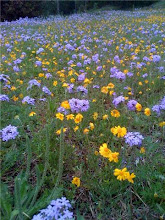
Verbena, or Glandularia, is a beautiful Texas native perennial. Each spring, the dark green leaves emerge while most Texas wildflowers lay sleeping and dormant. As spring continues, just around mid March and early April the dark green foliage almost disappears as the incredible eye popping bluish lavender flowers take center stage.
Many insects begin their Spring journey on and around these plants. As I stood among this stand of Verbena, it didn't take me long to see several species of butterflies and bees. I also noted many ladybugs. This was a delight since these insects are my all time favorites and heroes in the garden.

Verbena is a perennial and has a long term position in the Texas landscapes. Foliage emerges in February and blooms March - Fall. It hibernates over the winter and returns year after year. It is excellent in rock gardens and fields. I'm allowing a couple to grown in my raised vegetable beds for visual and insect appeal.
To some, Verbena is a weed - a wild thing that grows without a care in your lawn and garden. To me, it's heaven. Seeing one of these natives make my garden their home is an honor. I love looking outside at the beautiful field of flowers.

Enjoy these pictures - but, better yet...head outdoors and take note of the natives growing in your area. I'm off to garden - I have many seeds to sow today. Oh! I'm also happy to say I'm completing an order today for my handmade herbal lotions and serums. Cheers!

Sunday, March 20, 2011

Meyer Lemon: Beautiful Inside and Out


Herbhusband and I purchased a Meyer Lemon tree about 6 years ago. We love this specimen, from the time it blossoms to the time it bears its sunny yellow fruit. It takes about a year from the time the tree produces buds, blossoms, sets tiny green fruit, and nurtures and ripens the fruit to the size of a good size orange. It flowers in fall and spring. We look forward to the year long wait when we can harvest the lemons and slice one open to see the juicy fruit. Suddenly, all of our patience and efforts are reinforced - the fruit is the juiciest and tastiest ever experienced!

This blog post is dedicated to the dear Meyer lemon - I think every household should have one...not only for the health benefits but, for the connection one feels to the plant when watching it express the cycle of life over the course of a year. The blossoms are very fragrant; attracting butterflies and honey bees, making it the place to be for our beneficial insect friends. We winter our meyer in the greenhouse and when we open the door the sweet blossom fragrance intoxicates us.

Health Benefits:

Just 1/4 of a cup of the juice is almost half of our daily recommended amount for vitamin C! Vitamin C is a great antioxidant which helps boost our cells rejuvenating abilities to fight free radicals. Free radicals can hurt and damage cell membranes leading to inflammation in the body. Vitamin C can fight free radicals and has been known to help with inflammation and arthritis in the process
We all want that kind of power on our side!

As an herbal product maker, I pay special attention to Vitamin C's ability to boost cell rejuvenation and to fight free radicals (associated with cell damage and aging). Vitamin C is an excellent anti-aging weapon! Most of us apply many serums and crèmes designed to help us fight the signs of aging, but what about the inside? Drinking lemon water each day can help you do just that! Hooray! (Does the anti-browning effects of squirting some lemon on sliced avocado come to mind? That's a visual of citrus power!)

Recipes - must try!

Meyer Lemon Salad Dressing:
- 1 part Meyer lemon juice (juice of one lemon)
- 2 parts Extra Virgin Olive Oil (drizzle in more olive oil in the end if the dressing is too tart for you - drizzle in to taste)
- 2 cloves garlic crushed
- 1 tsp fresh ground pepper
- 1 tsp paprika
- salt to taste

pour contents into a jar and place lid on jar; shake vigorously and drizzle over fresh salad. This is wonderful over a salad that offers boiled eggs and tomatoes.

Lemon Water:
get your juices flowing each morning by squeezing a wedge of lemon juice in an 8 ounce glass of water. I've noted instant hydration and perkiness after drinking a glass of this water. The juice in water tonifies the liver and stimulates enzyme production.

Meyer lemon salmon


- Wild Caught Alaskan Salmon (flank to serve 4)
- 1/2 cup finely chopped red onion
- 2 tbs dill
- 1 Meyer lemon finely sliced into rings
- 1/4 cup olive oil
- salt and pepper to taste

Heat oven to 250 degrees. In a 9x13 baking dish, drizzle half of the olive oil to coat the bottom of the dish. Rinse the salmon and pat dry; place in the dish. Sprinkle salmon with chopped red onion, dill, salt and pepper. Place sliced lemon over salmon and along the sides of the salmon. Drizzle remaining olive oil over salmon and lemon. Place in oven and bake for 17-20 minutes. (If you like a crispier salmon, end on high broil for 3-5 minutes).

Meyer Lemon Peel:
Save those wonderful peels! They are a great addition to baked goods and beauty products. To do this, remove all fleshy fruit from the peel. Leave the peel to dry on the counter or use a dehydrator. Once completely dehydrated of moisture, grind the peels in a grinder and place in glass jar and seal with a lid. You can infuse vinegar with the peels to create a base for a kitchen cleaner, you can add the ground peels to sugar scrubs, salt scrubs or add when you want a special zesty taste in your baked goods.

Wednesday, March 9, 2011

Today in the Herbal Garden and Hill Country


Since my last post, the earth continues to come alive! It's so nice to walk outside and see GREEN rather than drabby browns.
The Texas Persimmon has started to produce leaf buds so there are specks of green on the tips of the trees. The Agarita shrubs had buds last post and now those rosey buds are opening up to display yellow tiny flowers. This is the time to pick some for a tasty treat!


The Mullein also continues to take shape! The first picture in this post is what the bee balm (Monarda)looks like right about now...lovely baby bee balm coming up makes me smile.

This past weekend I planted echinacea, garlic, heirloom tomatoes, sage, bell peppers, jalapenos, dill, yarrow and cintronella plants in raised garden beds. . Seen here is a 4'x8' raised bed with a 3'x3' raised trainagular bed in the background. The traingular bed has a china rose growing in it with catnip growing at the base. The china rose, in time, will follow the perimeter of the garden and should be quite showy when in bloom.


In the greenhouse, I potted up more heirloom tomatoes and continue to tend to thyme, wood betony, st. john's wort, evening primrose, self heal, lavender, myer lemon, lime, hibiscus, mints, loquats, and pinapple guava.


One of our big projects is to build a 5'x32' raised garden bed made of limestone rocks stacked 16" to plant the two figs, pinapple guava, and loquats in. This bed will line the interior back portion of the 32x40 garden we created two years ago. As you can see by the photo, this is a big job!! Although, we just started rolling up our sleeves on this particular bed, we keep the end result in mind to continue our motivation to complete this project.
Currently, we have two 4'x8' raised beds, one 4'x10' bed, and two 3'x3' triangular beds in the front corners of the garden. This Spring we will add another 4'x10 bed and finish the 5'x32' bed. When it's all said and done the garden will boast two 4'x10' beds, four 4'x8' beds, two 3'x3' triangular beds, the 5'x32' bed and a water fountain in the middle of it all. I simply cannot wait! As always, I will share my gardening and herbal adventures with you on this blog. I look forward to seeing the plants take hold and exploring this spring and summer with you!

Sunday, February 27, 2011

What's Growing in the Hill Country in Late February?

Many naturalized and native herbs, that's what!

Ahhh...the days are getting longer and the evenings are getting warmer. It's very nice to be able to enjoy some daylight in the evening time and to be able to wake up and fit in a walk before the day begins.

Weary of winter, I've started taking advantage of the warmer mornings and sunlight by heading outdoors to enjoy a morning walk before starting the work day. While on my walks, I can't help but look down on the earth... just to discover what herb and plant life has taken root.

It's also delightful to see the very first cheerful signs of Spring. Daffodils emerge from the earth with their sunny disposition as if telling us winter weary folks, "Hang in there! Cheer Cheer!Spring is near!" Daffodils are not for human consumption or application, I just love seeing the daffodil flowers as they greet me during my morning walks. Their visual benefit is worth noting.

I also love the moss growing along the ground covering the limestone rocks. The warmer temperatures and thick morning dew feed the moss the moisture it needs to thrive. The Hill Country is coming alive!

The earth, for the most part, is still a blank canvas of dead leaves and grasses. Evergreen Mountain Laurels and Mountain Cedar/Juniper trees add contrast, along with Agarita shrubs. I recently harvested many of the beautiful bluish/purple berries from the Cedar trees. I plan on making a household cleaner from them. Pictured here is the nature trail I walk along each morning.


The Agarita (Mahonia trifoliata) or Desert Barberry shrubs are showing signs of new life...tiny little reddish buds are clustered and nestled along the stems of the Texas native. In the next month or so, these little buds will bloom into tiny yellow edible flowers filled with sweet dewy nectar. Later, the pollinated yellow flowers will evolve into bright red edible berries. These berries can be picked and eaten directly off the shrub or collected and made into tincture or jam. Last year, I made a tincture from them and added them to one of my lotions. (To date, I think this gave one of my lotion recipes a secret advantage). The flowers can be collected and added to honey for a lovely and unique way to enhance your daily honey.


Another herb I notice on my walk is Vervain. The leaves are healthy and dark green, not the light bright green you see in Cleavers. Lavender colored flowers are emerging on the Vervain. Right now, there is more green than purple/blue flowers, but soon - there will be fields of purple/blue flowers with a bit of green in between. I can't wait! It is said if you want to collect Vervain to make tincture, to collect the areal parts prior to blooming. So to me, this would be the time when a lot of the vital elements of the plant are in the leaves prior to placing that energy into the blossoms.


Also along my walk, I encounter Texas Persimmon. Right now, the tree is bare - only grayish branches and twigs with specs of lichen here and there. The leathery leaves have not yet emerged. Later in the summer, this native tree will bear a small dark fruit, almost black in color The fruit is edible; however, the fruit is so small and filled with seeds, it makes it more of a novelty than a food staple. The birds love them and that's good enough for me.


Next, I see the Rosemary plant I cultivated from a cutting. As I see the large globe like shrub, I feel a sense of pride as I helped create this beautiful focal point on my walk. I often ask of this plant when I'm cooking and take the fresh sprigs to infuse soups and chicken dishes. This plant gives and gives and even in winter, proves to be a beautiful addition to the garden. Rosemary was once carried in pockets and often sniffed to awaken the mind and to clear the nose of bad smells in times where plagues filled the air with odor. It was also said to be worn as a crown around the head to keep warriors alert and vigilant.

Next, I see Mullein. I’ve really been enjoying watching the Mullein grow. I have to say, these herblings are my favorite to visit. As the leaves come in the plant takes on more of a rosette/cabbagy look. The leaves are thick and soft. I am looking forward to harvesting the leaves and flowers. I'll infuse the leaves in oil to add softness and smoothness to salves and lotions. I'll infuse the flowers to have on hand for mild ear aches.

Cleavers has been taking hold and really succeeds in areas that get plenty of moisture and sunlight. At this stage, Cleavers is still in a growth spurt. Cuttings can be sampled and infused in hot water for lymphatic cleansing; however, I'm waiting for the Cleavers to double in size before I harvest the aerial parts and infuse in oil to make my favorite "Healing Hands" lotion. There's a big difference in fresh cleavers infusion versus dried cleavers infusions. Much of the vital elements of the plant is still in tact when fresh.

Also coming up, but not pictured, are Dandelion and Plantain. The eath is covered with these herbs. I'm allowing Dandelion to take hold in one of my garden beds so I can harvest the root in the future. The newer leaves can be eaten for a fresh and nutrient rich addition to your meals. Plantain leaves are small and fresh. I will wait until the leaves are larger before I harvest them.

Well, this is the update on what's growing in the Texas Hill Country.
I'm off to the garden...it's 80 degrees and I have much to do!
I wonder what herbs are growing where you are. Send me an email or reply to this post and let me know.

Sunday, January 30, 2011

January/February Gardening Ideas

This is the time of year we long for Spring. We have endured cold and drab climates and there is very little green outside our windows. Many of us outdoorsy nature types have a touch of cabin fever and long to dig our hands in the earth and grow beautiful flowers, fruits, and vegetables.

So what can we do? On a day that allows, head outdoors and take the time to plan for Spring. Discover opportunities in your landscape that will allow for future planting and identify what it will take to spruce things up. Many beds are filled with fallen leaves and twigs. Take time to clean them up and add compost to prepare the beds for Spring.

In Texas, you can trim out dead branches and clean up roses and tidy up other evergreens. This is also a time to monitor beds for undesired weeds and pull up the ones you do not find interest in. I have my hands full pulling up elm tree seedlings. They are sprinkled all through my beds and if I don't get them now, I'll have a harder time later on. When pulling up clover, leave some behind to decompose and add nitrates to the soil. This is best done prior to allowing the plant to go to seed...otherwise it is not worth it since the seeds would perpetuate the problem.

Valentine's Day is my cue to head outdoors and trim back my rose bushes by 1/3 and to tie back and tame my climbing roses. What I do now will dictate how the roses will perform in Spring. It's a great time to really get in there and work with the roses and pull dead canes since the chances of running into spiders and wasps are slim to none.

Start seedlings indoors in sunny windowsills. Start with sweet peas, lettuce, and green beans. Try growing carrots from seeds and using the carrot tops as "micro greens" for zesting up salads and sandwiches. Trust me...whatever you do...you won't regret it come Spring. So, get out there! Get creative and get growing on laying the foundation to your Spring gardening adventures. Whether you grow seeds, clean up beds, or trim roses - you'll get a sense of satisfaction and feel so glad you did!

Thursday, January 20, 2011

Enhance Your Skin’s Beauty with Rose Hydrosol

Rose hydrosol is made by distilling luscious rose petals and drawing out the powerful elements of the petals into a steamed distilled floral water.

The hydrosol can be applied directly on the skin and used as a toner to refine and reduce the size of pores. It serves as a humectant by drawing moisture to the skin. By religiously applying rose hydrosol, one soon experiences a transformation; skin looks smoother, more toned, more hydrated & illuminated over time.

Rose hydrosol can also be made into a facial mist and applied at anytime to perk up tired skin. I make a wonderful rose hydrosol skin elixir and mist it just after cleansing my face each morning. My skin craves this mist and radiates all day expressing gratitude when I use it. I’ve used the mist for two months straight and my skin has smaller pores, a healthier glow, and fewer blemishes as a result. I couldn’t be more excited to discuss the benefits of rose hydrosol since I’m a tried and true case study.

Prior to the rose hydrosol skin elixir I made in the herbal kitchen, my skin was overly oily and blemished. I was breaking out around my chin, cheeks and jaw line. My complexion was in trouble. I had read about the benefits of rose hydrosol on the skin and decided to make my facial mist. I’ve been elated ever since. The smell is light and fragrant – you could go beyond skin care and mist liberally on sheets, upholstery, and use as a general room enhancer.

My skin drinks in the moisture and it helps keep dry skin hydrated and oily skin under control. Rose hydrosol serves as a mild antiseptic (making it a wonderful toner) and has a wonderful ability to control and balance sebum production (making it great for both oily and dry skin types).

I’ve also come to rely on rose hydrosol as one of my weapons of choice in fighting fine lines and wrinkles. I’m not kidding…I’m impressed by the reduction in fine lines and the overall reduction of wrinkles. I simply love it. Some rely on rose hydrosol as an anti-inflammatory. I can see why. The blemished skin I once had has healed and my skin has tightened and smoothed as a result.

I think it is very fair to say, when it comes to reducing the fine lines and wrinkles, bouts of acne, mixed complexions, and size of pores….rose hydrosol is the way to go. Use it as a toner, use it as a facial mist…just use it! You won’t regret it.

Thursday, December 30, 2010

Herb Babies Are Here!


While walking the property outside, I thought I'd take a close look of the ground and see what was springing up. To my delight, I noted baby cleavers growing, baby mullein growing and lots of verbena growing. How exciting - I've been looking forward to the cleavers coming since saying goodbye to it last summer. I can hardly wait to drink a cleavers infusion and make fresh cleavers lotion!

Here's a little information on Cleavers, Mullein and Verbena:

Cleavers (Galium aparine): Grows in part sun part shady areas with lots lose soil and organic matter on the ground. Mine grows just under the rose gardens amongst all the fallen rose petals and leaves. The soil is very rich in decaying organic matter. It loves to grow close to the ground and when you touch it the leaves feel as if they touch you back...they feel a bit sticky due to tiny little hooked hairs on the slender juicy pinnate leaves. It is not a native, but it is abundant and invasive to some. Europeans originally used it every Spring to cleanse their blood and help stimulate glandular and liver function. Now, people all over the world like to make a tea out of this yummy herb and drink it for the same purpose.

Cleavers is easy to harvest. It appears as if it is well rooted, but quite the contrary. It is barley rooted to the ground and just grows and climbs along. When you pick up one leaf, you are able to practically pick up the entire plant!

Cleavers can be infused in oils and made into salves and lotions. It can be made into tincture and infused into a tea. It can be cooked in soups and used much like a vegetable. It has an earthy fresh flavor. It can be juiced in a juicer and drank as a super green morning drink to get you revved up in the mornings. A shot or small amount is all you need, since it is a cleanser - you may get loose stools if you consume too much at one time. I like to drink a cup of Cleavers infused tea once a day in the Spring time. It seems to help clean the system of impurities and clear the face of blemishes. To make an infusion, boil a couple of cups of water and once it comes to a boil, take it off the heat and add a handful of the herb into the pot. Infuse for about 15 minutes, strain, and then drink the infusion. It is very light green and is pleasant to the pallet.

Mullein (Verbascum thapsus): Mullein is a medicinal herb often used to ease inflammation in the respiratory tract and with alleviating mucousy coughs. People infuse mullein with hot water to make a tea and consume it to ease irritation and inflammation. I have infused dried mullein leaves in extra virgin olive oil to make an oil infusion which is good for relieving ear aches in children and adults. Just a couple of drops of the oil is what people use to help ease the discomfort; however it is not for eardrums that have broken - it is simply for basic ear aches.

The oil also has anti-microbial properties. I have made salves and lotions with mullein infused oils. It is very soothing to the skin.

I just love walking along and finding mullein on my path. It is so soft and velvety. I find it very inviting and as I look down into the plant, the leaves seem to draw me in.

Vervain (Verbena glandularia):

Vervain covers the field where I live....in the Spring the ground is covered with its blue/purple flowers. A tincture can be made of Vervain by harvesting the aerial parts. It is best to harvest the aerial parts before the flowers open. It is a nervine tonic used to strengthen the central nervous system. It's actions are sedative, anti-spasmodic, & diaphoretic. Simpler's method is the easiest, in which you fill a jar full of plant material and pack it in tight. Then pour vodka into the jar; ensuring all the plant matter is submerged. Cover the jar and store in a cool/dark location and shake each day. After a couple weeks, strain the mestrum (exhausted and depleted plant material) and the plant free liquid that is left is your new tincture!

People take drops of the tincture as it is regarded to aid with sleep, digestion and inflammation of muscles. Most people, who use the tincture, use it to rest easier and ease away tension and anxiety. They use it as a sleep aid. I recently read that people use it when muscles are spasming or inflamed. As a diaphoretic, it has been used with fevers. People have also turned to Vervain to help reduce inflammation of the gall bladder. It has also been used as a mouthwash to assist with gum inflammation.

Tuesday, December 28, 2010

Today in the Herbal Garden: Growing Medicinal Herbs in the Greenhouse


Just because it's winter doesn't mean the herbal adventures go dormant. Not with this Hill Country herbalist! With a greenhouse, I can winterize my herbs and keep them warm and happy all winter long. Along with herbs, I have heirloom tomatoes I'm growing from seed, a rather large Meyer lemon tree, a lime tree, many hibiscus plants and of course herbs herbs herbs! Here are a few herbs I have growing in the greenhouse this month:

Thyme (Thymus vulgaris)I just love each and every plant in the mint family or Lamiaceae family. They are so easy to grow, even for gardeners just starting off. I'm harvesting nearly each day from this Thyme plant to help me ward off colds and flu. Anytime I run into someone suffering from a cold or flu I inform them of the benefits of Thyme. It doesn't hardly matter how one ingests it, just so it gets in the system to help the body get well. The active ingredient in Thyme is Thymol and its actions are anti-microbial, anti-bacterial, anti-spasmodic, and expectorant. It can be gargled with once it's been steeped in warm water to help fight sore throats. Since it's anti-spasmodic, people turn to Thyme relax the gastrointestinal tract. I simply use it in most of my meals so I get a good boost each time I eat. It's great in soups and sauces. Try it, you'll love it.


Self Heal (Prunella vulgaris)is doing quite well being potted up in the greenhouse. I grow these plants for their wonderful healing leaves. People have used the leaves for their antiseptic, astringent, and anti-spasmodic actions. The leaves can be used fresh or dried in tincture, can be made into tea,or infused in oils to make salves and lotions. Many see the leaves as "tongue like" leading one to associate the benefits of this herb with being beneficial for the mouth and throat. I like to use it very much like it sounds, to help heal the skin and aid with bruises and rashes. It can be steeped in warm water and the infused water can be used to clean cuts and wounds. Internally, it is a bitter helping the digestive tract. This herb is also in the Lamiaceae (mint) family.


Wood Betony (Stachys coccinea)Another healer in the Lamiaceae family! What a joy this plant brings when it blooms scarlet red throaty flowers in late summer. The leaves have such a wonderful texture. They are rather thick, fuzzy, and very bright green. The leaves of this plant have been used by infusing them in water and sipped to aid with rattled nervous energy. It's also a bitter. It is said to strengthen and feed our central nervous system and also has a calming action. It can also be used in poultice form to assist with healing wounds. I grow all my herbs for topical uses but I enjoy reading and researching how ancient and modern day people have used these plants internally.


St. John's Wort (Hypericum perforatum)This is a lovely herb. The leaves are smooth, soft, and light green. It is sort of fern like in it's pattern. The fresh leaves can be used to make an oil infusion and the infused oil can be used topically for bruises, burns, and wounds. I have not used my herb this way; however, I have read care must be taken as the infusion can cause skin irritation in some people so if someone were to try it it would need to be tried in a small area of the skin to determine level of sensitivity. It can be made into a lotion and people have used it to aid in wound healing and in with rheumatic pain. The oil, when fully infused, will turn red in color. The flowers are a cheerful yellow. I have had my plant since late fall so it has not bloomed just yet. I am looking forward to seeing the first flowers appear next year.


Calendula (Calendula officinalis) Last on this post, but certainly not least, is the lovely and cheerful Calendula. I harvest the petals and air dry them and store them in a container. When I make rice, I add the petals as it simmers and it brings a delightful element to the dish. The fresh petals can be used in salad dressings. I frequently have dried blooms infusing in olive oil on the windowsill in the herbal kitchen. It is a staple in my serums and lotions. The healing properties of this plant make it an herbal favorite. The petals can also be steeped in water and the cooled infusion can be used as an eyewash. The infusion can also be used as a wonderful hair rinse, mouth rinse, and toner. It has anti-inflammatory properties, as well as anti fungal, antiseptic, astringent, and antispasmodic.

Making Serums with Infused & Essential Oils


Serums are liquid treatments high in concentrated ingredients to address our skin's needs. They are a wonderful beauty treatment and people rely on them to address problems such as redness, wrinkles, discolorations, and marks. I love using serums under the eyes, as they are great in targeting dry areas. Since the skin just underneath our eyes lacks sweat glands, it tends to be very delicate and can become dry.

Serums are absorbed very quickly by the skin and our skin can absorb the serum into it's deepest dermal layers.

I recently made a serum designed as an acne/mature skin serum. I am one of those lucky ladies who is battling the signs of aging while still getting blemishes like a hormone ridden teen! As if aging skin is not dreadful enough - try complicating things with blemishes, too!

Serums can be made with special infused oils. I like to use a calendula infused oil since calendula is so well regarded for collagen and cell renewal. I also like using macadamia nut oil and jojoba oils as these oils tend not to aggravate acne. Macadamia nut oil is used to moisten older dryer skin, while jojoba oil is used to prevent dehydration and help with blemished skin.

Here's my favorite ingredient list for acne/mature skin serum. I call it "Smooth as Silk Serum for Acne and Mature Skin":

- calendula infused oil
- macadamia nut oil
- jojoba oil
- neem oil
- evening primrose oil
- essential oils of lemon, frankincense, ylang ylang and geranium.

It's so soft and silky when you put it on, it feels so good. The skin under my eyes just loves it!

Thursday, December 23, 2010

Making Infused Oils


One of the basic components in making natural homemade products that are good for you and nutrient rich is infused oils. Infused oils can be any one of your favorite carrier oils, i.e., extra virgin olive oil, jojoba oil, sweet almond oil, grapeseed oil, etc. I typically use extra virgin olive oil for it's long shelf life, but many people rely on grapeseed oil for its light texture and affordability. Mindy Green recommends olive oil and coconut oil for a longer shelf life and I agree.

So, what's an infused oil? An infused oil involves taking herbs/plant matter that you've identified as having certain desirable properties (such as soothing to skin)and infusing it in the carrier oil over a period of time so that the essence of the plant gets transferred into the oil - much like the process of making a delicious cup of tea. The plant gets drawn into the oil leaving you with a wonderful product that can be used either by directly rubbing it on the skin via massage or made into body products such as balms, salves and lotions. Most of the infused oils I make go into making lip balms, healing salves and delectable lotions!

Here's a simple process you can follow so you can make wonderful infused oils at home. You can even make delicious infused oils for cooking! Think about using your summer basil and infusing it into olive oil for a delicious drizzling oil to set your dish apart from the everyday hum drum dinner...Yum!

Making Infused Oils:
- harvest or purchase herb of choice from garden or market
- air dry herb 75% so much of the water content has left the herb
- chop or lightly grind herb and place in mason jar
- top with carrier oil (I prefer extra virgin olive oil)
for every cup of herb use 3 cups oil or cover to ensure all plant matter is in the oil.
- leave in a sunny windowsill for two weeks, shaking/rocking the jar daily.
- after two weeks, strain the spent herb matter through a cheesecloth (otherwise known as the "marc") and compost/discard
- bottle up your liquid goodness!
- add 400 iu of vitamin E to extend the shelf life and prolong it from turning rancid- store in a cool dark location clearly labeled and it's ready to use!

Here's a picture of the "marc" - basically depleated of it's plant powers and ready for composing.


As you know, I grow lots of yummy herbs in the garden and here are some of the infused oils I've made just from what I've grown:


marjoram infused oil (great for gardener's lotions and salves)
basil infused oil (delicious when drizzled over pasta and pesto)
chickweed infused oil (wonderful for salves and lotions)
wild lettuce infused oil
cleavers infused oil
evening primrose infused oil
bee balm infused oil
henbit infused oil

Although I don't grow enough Calendula to harvest all I would need to make an infusion, I do buy it organically from Mountain Rose Herbs and let me tell you.. I just love using this infusion in most if not all my products! It's a goody!


-

Sunday, October 24, 2010

Today in the Garden: Havesting Mixed Lettuce and Tomatoes

It's a wonderful day when you can step outside, smell the fresh air of fall, and harvest goodies from the garden. I love farmer's markets, but there's nothing better than to "shop" around your very own garden and harvest fresh from the plant.

About a month a ago, I planted buttercrunch, red leaf, and oak leaf lettuce. When grown and harvested yourself, the lettuce takes on more flavor and bite. It's a bit more bitter and has better presence in salads. It's fun to toss with basil and dill(also growing in the garden) to really add dimension and character to a lettuce mix. Since lettuce grown in the garden is a bit more bitter than store bought lettuce, it should help kick up our digestive juices helping our digestion that much more.


The tomatoes I'm harvesting come from the Juliette heirloom tomato planted this past Spring. It seems the fruit coming off this plant is larger and more impressive than the fruit offered in Spring. I'm completely amazed how generous this plant is in offering its fruit. It is quite impressive! Please don't overlook next time you are shopping around for a tomato plant for your garden - if you see Juliette...grab it!


In this picture you can see the fury of blooms this plant has. It's ready to go at it, all over again, with yet another round of tomatoes. Incredible!

Try this simple recipe to spice up salads, sandwiches, or wraps:

Hill Country Salad Mix:
- a dozen Juliette tomatoes (quartered)
- 6 basil leaves
- 3 buttercrunch lettuce leaves
- 1/4 thinly sliced onion
- 1/4 cup fresh dill
- juice from one lime
- drizzle of extra virgin olive oil
- salt & pepper to taste

Ribbon cut basil leaves and lettuce. Rough chop dill. Thinly slice 1/4 of an onion. Toss with quartered tomatoes and add the juice of one lime - salt and pepper to taste. Excellent on top of wraps or served as a salad with fresh crumbled cheese.

Sunday, October 17, 2010

Today in the Herbal Kitchen: Lotions!


I love bees wax. I attribute the success of my lotions to this magical wax. I'm almost through one of the first blocks I purchased earlier this spring. The act of shaving it and storing it is therapeutic. It gives me time to appreciate and respect our bee friends, for without them - our existence would be threatened.

Today, I made a cocoa rose body butter. The base scent is chocolate with hints of rose and tangerine. I think this is a very special lotion and look forward to hearing the feedback I'll be getting on this one.

I also made a calendula and raspberry leaf lotion featuring eyebright extract and neem oil. This lotion specifically targets the sensitive skin under our eyes, throat and chest. This is my favorite anti-aging cream.

I know it's been a while since I blogged - I've been quite busy in the herbal kitchen and garden coming up with new recipes to feed our bodies through our skin. I'll leave you with a picture of Basil - seen here smelling the leaves from the herb Texas Betony (Stachys coccinea).

Stachys is perennial herb that loves full sun and attracts hummingbirds and butterflies with it's vibrant red throated flowers. It is a great herb to sip in teas, mostly used to calm our central nervous system. It is said to feed our central nervous system while having a calming action. It's associated with helping people with nervous tension.