Welcome to Hill Country Herbalist

Wednesday, June 16, 2010

Rose Petal Honey


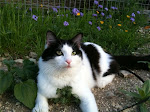
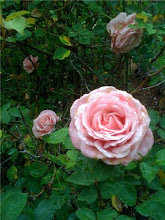
Roses are not just for smelling and admiring from afar. We can eat them, too! Eating roses from the grocery store is not advised since they have too many additives to keep them preserved; however, home grown, pesticide free, organic heirloom roses are very much edible. I once had a rose arrangement proudly displayed on the coffee table (freshly cut from the garden) just to find Basil eating them! That's him caught in the act last fall - he was such a stinker! A smart stinker, though! That cat was getting his share of vitamin C.

Rose petals can be tossed on salads for a unique twist, sprinkled over ice creams or confections, mixed with butter then molded, chilled and served for a delightful brunch, or mixed into jelly and jam recipes.

Here, I've made a rose petal honey. This special honey can be added to teas, pancakes, or anything else you can think of to offer a boost of vitamin C. Petals are best when the flowers first open. This honey will be a wonderful addition to the bee balm honey I made combating a cold/flu. These honeys are immune boosters and delicious to boot!

Sunday, June 13, 2010

Red Katydid Outbreak in Central Texas

There must be millions of these outside. They are feasting on all the live oak trees and have eaten all of my roses and some patio potted plants. I've killed about a hundred today, but to read this (below) on the internet - frightens me. I see about 5 of them on every 6-8 leaves on the oak trees outside.

"The Central Texas leaf-katydid is an arboreal or tree-dwelling species found mostly in oaks," Troxclair said. "Large populations of them can decimate oak tree canopies and swarm over property, though they're mostly considered a nuisance or annoyance."

Troxclair said he witnessed the previous explosion of Central Texas leaf-katydids in 2007 and remembered a large bottomland area near Pearsall where the rapacious insects had completely defoliated hundreds of live oaks. During that year, outbreaks were reported in Bandera, Bexar, Comal, Frio, Hays, Kendall, and Medina counties.

What I'm noting is they are eating the oak leaves, rose leaves, pomegranate leaves, bird of paradise leaves, some grape leaves - but they are leaving the herbs alone. The calendula, thyme, basil, chocolate mint, peppermint, bee balm, oregano, rosemary, lavender, self heal, skullcap are all untouched. They haven't moved to the raised garden bed area - I'm keeping a very close eye to ensure they keep out the the tomato and veggie garden!

Reference: http://www.hpj.com/archives/2010/jun10/jun14/0607TexasInsectNumbersIncre.cfm
High Plains Midwest Ag Journal

Revenge on the Leaf Eaters


This blog is for all of you who think I'm a wuss when it comes to the creepy crawlies. Well, not on this front. For about two months I've seen my rose garden get chewed into twigs. I've come to realize it is a gigantic grasshopper faced red bodied, noisy leaf eater! Their faces are so gross and their mouths are most of it. Well, as I've been listening to their non stop wing rubbing - day and night I thought I had to do something..but how? I don't use pesticides and there are way more of them than me. They are the size of my index finger and I must have counted about 125 of them just on the back wall yesterday.

I know they stare at me when I come and go and I know they don't fear me. They thought wrong this morning. As I looked out the window, I saw 14 of them chomping on the few leaves the climbing roses had left. They are relentless, I said!! That's it!!

With a broom in one hand and a tall stick in another - I started stabbing them, crushing them, stomping them...one by one. I didn't know who was louder as they went down - them or me as I squealed and screamed as I killed them. As more and more leaf eaters were notched on my belt I grew more confident in my victory...and I especially relished squashing two mating leaf eaters at the same time! Ahhh!! Relief!!!

Saturday, June 12, 2010

Today in the Garden: June Harvest


Harvested out of the garden today: heirloom tomatoes, basil, and lavender. Shown here are Dr. W. Yellow and Juliette. I must come out of the garden looking like a greedy squirrel each day - I go in there expecting just to pick a few and before you know it...I'm overflowing with tomatoes that are rolling out of my arms and hands! I probably could have lifted my skirt today to make an impromptu basket, but it was kind of short and wasn't sure if the neighbors were home or not..so I took two trips. Dr. W. Yellow are the large pumpkin shaped tomatoes. I can't wait to slice them with sea salt sprinkled on them. YUM!

Also coming out of the June garden: basil and lavender. I plan on drying the lavender by hanging them then collecting the blossoms. The dried blossoms can be mixed with dried rosemary, thyme, savory and other culinary herbs and makes a nice herbal rub for chicken. Delicious!

Blanco Lavender Festival


I volunteered at Heron's Nest Herb Farm today, which is one of the local Blanco farms involved in supporting the annual Lavender Festival. At Heron's, they grow lavender and echinacea as well as make many many products made from lavender (salves, air fresheners, lotions, surface cleaner, etc.). It was great to see a variety of vendors there selling crafts and goods. There was also a well attended women's race. Many runners stopped off at the beverage booth I was manning to quench their thirst with lavender lemonade or hibiscus tea. Also offered were cookies with optional lavender icing. They were a hit. It was so good to see so many people connect with the lavender plants and take time to support this community.

I was so happy to see Wildflower School of Botanical Medicine founder/owner Nicole Telkes there with fellow herbalist Cecile. They were educating passer-bye's on the school's various workshops and products.

I took a picture of honey bees enjoying the lavender and a child running freely through the lavender field.

When I came home, I was so energized I infused new batches of oils and now have them soaking in the sun on the kitchen window sill. I infused Calendula flowers, Chamomile flowers, Cleavers, and Alkanet Root. I plan on making a large batch of lip balm next month.

Thursday, June 10, 2010

Today in the Garden


Today was a sunny, hot and steamy day. I came home from work and went straight to the garden with a glass of Dry Comal Creek Cabernet (I know it's a faux pas but I had a little ice in it to cool off). The Meyer lemon is doing great and is filled with about 30+lemon babies. These lemons are juicy and smooth with no seeds. We look forward to these lemons each year. I saute them in olive oil and salt - peel and all. The saute is great over fish. The barrel it's in was purchased at Becker Vineyard in Fredericksburg, TX and is a recycled Cabernet wine barrel....perfect for the Meyer lemon tree.

The grape/tomato/potato/onion garden bed is doing well too. This is the first year for these grapes so the fruit was very vulnerable and most of it was lost to insects in early spring; however, the leaves are being infused in olive oil for lotion making. Grape leaves are very high in minerals and vitamins. The onions have a long way to go, but the tomato plants (next picture) are doing quiet well.

Also growing in the garden is catnip (Nepeta cataria). Catnip is in the mint family and the flowers and leaves can be collected from June - September. Catnip has been used as a cold/flu remedy. It's actions are anti-spasmodic, diaphoretic, sedative and astringent. As an anti-spasmodic it has been used to ease upset stomachs, flatulence and colic. It has been used to ease diarrhea in children and helps ease and relax the nerves. As a tea, one to two teaspoons of the dried herb can be infused in a cup of boiling water according to David Hoffman's, "The New Holistic Herbal".

Reference: David Hoffman's, "The New Holistic Herbal" 1983 and 1990.

Harvesting Raspberries and Tomatoes After the Rains


In the garden, I'm growing 8 varieties of heirloom tomatoes. The tomatoes that are ready by the handful each day is the Juliette variety. They are prolific and delicious with fresh sea salt tossed with minced garlic, olive oil, and lemon. For an added twist, I added basil flowers to the mix and the result was amazing - just enough pow to brighten the tomatoes.

Years ago, we planted a raspberry plant. It would produce three or four berries. Now this plant has spread (almost wildly) all over the floor of one of the gardens. Since handfuls of berries comes as a result, the rambling raspberry is very much tolerated.

Also ready to harvest: lavender flowers! They are gorgeous. Speaking of lavender flowers, the annual lavender festival at Heron's Nest Herb Farm in Blanco, Tx is this coming weekend. Many herbalists and other plant lovers will be there. Included in the event line up is a 10k women's run, culinary artists, music, herb products for your body and home, and lots and lots of lavender and echinacea to buy. For more information you can view their website at: www.heronsnestherbfarm.com

Wednesday, June 9, 2010

New Braunfels Flooding


At 2:30am I woke up hearing one boom after another followed by lightning and horizontal rains. There was no sleeping through the booming thunder last night. At 6:30am we received a call from a neighbor up the way who was away on a trip. He had received a call from the security alarm company indicating a signal had read an indoor fire at his place. Alarmed, my husband went to go check on the house and the dog who was there. Fortunately, there wasn't a fire but unfortunately there were several other fires in New Braunfels the fire department needed to attend to. The lightning was hitting hard last night.

The electricity would turn on and off but what was more concerning was the 11 inches of rain we were getting in just 4 hours. News reports of a mobile home floating down the river with people still inside haunts me. I still don't know how they are doing, but I hope they are all okay. A local tubing outfitter, Rockin' R, flooded and all their tubes and rafts floated away and their outbuilding where they were stored collapsed.

Meanwhile, at my house - I was closely watching the water rise higher and higher on the land. As the creek swelled, the driveway became indistinguishable from the rest of the rushing water. On any other given day, you would be able to see the driveway in all of these pictures.

When the rain eased around 8:30 this morning, the water receded and eventually the creek sounded like a trickling stream - peaceful and beautiful. The water is so powerful. School buses used to transport tubers at Rockin' R were strewn about like toys bent around trees, yet there was an quiet calm after the torrential rains. Amazing how powerful the rushing water can be.

Later, after checking on a fix'r upper river house we purchased in downtown New Braunfels - 40 feet over the Guadalupe river - a pair of hot pink underwear was found hooked and dangling 20 feet from one of the sycamore trees in the back of the lot. Flooding or not - gotta love this town.

Sunday, June 6, 2010

Making Bee Balm Honey

R


People have relied on honey infused Bee Balm at the first hint of a sore throat. Bee Balm, also known as "Sweet Leaf" (Monarda)has long been used by American Indian healers. Bee Balm is a member of the mint family. All parts of the plant are high in essential oils and has more thymol than thyme. Thymol is a powerful agent found in thyme and bee balm with antibacterial and antifungal properties.

Today, I had my hand at making Bee Balm Honey. I have Bee Balm growing in my herb garden and I've been waiting for it to start blooming for just this occasion. I started by harvesting the flowers, leaves and stems (being careful to groom the plant rather than disfiguring it). Next, I got out a very high quality local honey. I then placed the Bee Balm in a mason jar and then poured the honey into the jar to the point all the parts of the plant were covered. This infusion will take about two weeks. In two weeks, I will remove the plant from the honey and the honey can then be used for sore throats, fevers, or just topping over fresh fruit.

Bee balm can be used in cooking and can be used as an oregano substitute. You csn slso cook with the flowers. It has no known toxicity and is classified with many safe mints used in cooking.

Reference: Mathew Woods "The Book of Herbal Wisdom: Using Plants as Medicine".

Saturday, June 5, 2010


Today I made a lovely smelling lotion made from calendula flowers and raspberry leaves. I also added wonderful oils and vitamins for collagen rejuvenation. I can't wait to give this one out and see how it works for people's skin. With eyebright extract, I suspect this one will be wonderful as an under eye intensive.

Pictured is the lotion I made today, as well as the first calendula blossom growing on my patio. When I harvested the raspberry leaves they were not fruiting, but thought it was neat to show you all the wonderful raspberries growing in the garden. Perhaps I'll make a raspberry fruit tincture!

Tomorrow, I'm doubling the batch for "orange blossom". This is a wonderful lotion used on the face, hands and body. In using it, I've noticed smoother and softer texture in my skin. It's so pure and clean it is perfect for the face and neck. I'm also going to re-make the sugar facial scrub.

Tuesday, June 1, 2010

Completed my Herb Classes!


Since January, I've been attending classes taught by Herbalist Nicole Telkes in Austin. Each weekend I've attended these classes in Austin, Blanco or other sites offering a variety of native and naturalized plants that have been studied and used in health and wellness. It's been a fantastic journey. On Sunday, we had our final class where we received our certificates and are now considered certified herbalists.

I presented my project I've been working on for the last six months - a product line that is toxin-free and nutritive for our bodies and skin. I am determined to develop a line that is readily absorbed by our dermal layers promoting skin wellness and vitality. This line will include under eye intesive creams, facial moisturizers and cleansers, body lotion and wash, and lip treatment intensives.

When I get tired or think I've taken on too much with work and herbs, I watch the "10 humans" study conducted by the Environmental Working Group. If you haven't already seen this presentation discussing findings from a research study involving 10 newborn babies in the US - please do!

You can find this by going to www.ewg.org and clicking on the "10 humans" study. While you're there, check out the site. It is a wealth of information. You can also check out their database "Skin Deep", where you can find your cosmetic products you use and see their ingredients and see how it measures up. You'll be surprised how toxic many of our favorite products we grew up using really are.

5 Toxins to Know about

http://www.cnn.com/2010/HEALTH/05/31/chemical.dangers/index.html

Please read this article posted on cnn.com. It lists and describes five toxins associated with health and neurological function. I've cut and pasted below:
BPA - Bisphenol A

What it does: BPA is a building block of a lightweight, clear, heat-resistant and almost unbreakable plastic called polycarbonate. It's also used in epoxy resins.

Where it's found: Water bottles, baby bottles, reusable food containers, plastic tableware, infant feeding cups, linings of infant formula cans and other cans, jar lids, CDs, electrical and electronic equipment, dental sealants.

How we're exposed: Eating food or drinking liquids stored in containers containing BPA. Infants and small children may also be exposed from hand to mouth contact with materials containing BPA. BPA also migrates from dental sealants into patients' mouths. Fetuses are exposed in the womb by their mothers. Almost everyone has been exposed. The Centers for Disease Control and Prevention found BPA in the urine of 93 percent of the people it tested.

Special Report: Toxic America

Health effects: The American Chemistry Council, an industry trade group, says exposure is so low there are no ill health effects. A new five-year Kaiser Permanente study of Chinese factory workers found higher BPA exposure linked to reduced male sexual function. This research joins a growing body of research on animals that suggests BPA poses a potential cancer risk and may mimic the female hormone estrogen and disrupt the extremely sensitive chemical signals in the body called the endocrine system. According to the Food and Drug Administration, these studies suggest BPA could affect "the brain, behavior and prostate gland in fetuses, infants and young children."

Regulation: BPA is an Environmental Protection Agency "chemical of concern," one of five substances the agency has targeted for increased scrutiny and potential new regulation. (The others are phthalates, short-chain chlorinated paraffins, PBDEs, and perfluorinated chemicals including PFOA.)

The Food and Drug Administration allows BPA in flexible food packaging.

What you can do to reduce exposure: Buy stainless steel bottles and glass food storage containers. If you buy plastic, check for the recycle number on the bottom. If there is a number 7, assume the container contains BPA unless it explicitly says otherwise. Switch to fresh or frozen vegetables instead of canned. Other precautions include not microwaving or putting hot liquids in BPA plastic containers and throwing away baby bottles and feeding cups that are scratched.

Phthalates

What they do: This family of chemicals softens plastics. They also are used to bind chemicals together.

Where they're found: Shampoos, conditioners, body sprays, hair sprays, perfumes, colognes, soap, nail polish, shower curtains, medical tubing, IV bags, vinyl flooring and wall coverings, food packaging and coatings on time-release pharmaceuticals.

How we're exposed: Absorbed into the body through personal care products, ingested in drugs, on food, in water and dust. Infants can be exposed through infant care products like baby shampoos, lotions and powders. Fetuses are exposed in the womb. Virtually everyone is exposed to phthalates.

Health effects: A new study by the Mount Sinai Center for Children's Environmental Health and Disease Prevention Research found a statistical association between prenatal exposure to phthalates and incidence of attention deficit hyperactivity disorder years later. Phthalates are considered endocrine disrupters, and studies have shown a statistical association between phthalate exposure and male sexual development. Research has also shown phthalates disrupt reproductive development of male laboratory animals.

Tell us: Is your town toxic?

Regulation: Phthalates are an EPA "chemical of concern." The FDA allows for plastic containing phthalate in flexible food packaging. The U.S. government last year banned or restricted six phthalates for use in children's toys and children's products.

What you can do to reduce exposure: Avoid shampoos, conditioners and other personal care products that list "fragrance" as an ingredient. These may contain phthalates. (Companies are not required to disclose the ingredients in their scents, and the industry says this phthalate is safe.) The federal government recently ended one source of exposure, banning the sale of toys containing any of six phthalates.

PFOA -- Perfluorooctanoic acid (also called C8)

What it does: PFOA is used to make Teflon and thousands of other nonstick and stain- and water-repellent products.

Where they're found: PFOA is present in Teflon and other nonstick or stain- and water-repellent coatings as a trace impurity. These coatings are used on cookware, waterproof breathable clothing, furniture and carpets and in a myriad of industrial applications. PFOA can also be produced by the breakdown of these products.

How we're exposed: Inhaling contaminated air, eating contaminated food and drinking contaminated water. Some researchers say nonstick pans give off PFOA vapors, which contaminate food.

Health effects: Almost everyone has PFOA in his or her blood. PFOA causes cancer and developmental problems in laboratory animals. The EPA concludes research on PFOA is "suggestive of carcinogenicity but not sufficient to assess human carcinogenic potential."

Regulation: PFOA is an EPA "chemical of concern."

What you can do to reduce exposure: The EPA does not recommend any steps to reduce exposure to PFOA. You can reduce potential exposure by using stainless steel or cast iron cookware. If you use nonstick cookware, do not overheat, which releases toxic gas.

How toxic is your air?

Formaldehyde

What it does: Formaldehyde is an ingredient in resins that act as a glue in the manufacture of pressed wood products.

Where it's found: Pressed wood products such as particle board, plywood, paneling and fiberboard; also, glues and adhesives and durable press fabrics like drapes.

How we're exposed: Breathing "off-gassing" from products containing formaldehyde. Car exhaust and cigarette smoke also contain formaldehyde.

Health effects: Formaldehyde is a known human carcinogen, causing cancers of the respiratory or gastrointestinal tract. Formaldehyde fumes can also cause nausea, skin irritation, watery eyes, or burning eyes, nose and throat.

What you can do to reduce exposure: Buying furniture free from formaldehyde eliminates much of the exposure we face from the chemical. One option to reduce "off-gassing": purchase "exterior grade" pressed-wood products, which emit formaldehyde at significantly lower rates. If you have wood products containing formaldehyde, increase ventilation, reduce humidity with air conditioning or dehumidifiers and keep your home cool.

PBDEs - Polybrominated diethyl ethers

What they do: PBDEs are a group of chemicals used as flame retardants, meaning they reduce the chance of something catching fire and slow how fast it burns when it does catch fire.

Where they're found: PBDEs are found in televisions, computers and wire insulation, and furniture foam. Over time, televisions and other products shed PBDEs, which accumulate in dust. More than 124 million pounds of PBDEs are produced annually worldwide and they do not break down easily.

How we're exposed: Swallowing PBDE-contaminated dust and contact with this dust are the primary routes into our bodies, where they collect in fat tissue. We can also be exposed through food and water. Breast-feeding infants are exposed to PBDEs through their mother's milk and have the highest exposure compared to their body weight, followed by infants and toddlers, according to the data collected by the Centers for Disease Control and Prevention. Levels in humans have been rising rapidly since PBDEs were introduced in the 1960s and '70s.

Health effects: PBDEs accumulate in the body. Toxicology tests show PDBEs may damage the liver and kidneys and affect the brain and behavior, according to the EPA.

Regulation: In December, the EPA named PBDEs "chemicals of concern."

What you can do to reduce exposure: Try to find products without PBDE flame retardants and be sure to sweep up dust.

Thursday, May 27, 2010

Harvesting Red Clover Blossoms and Making Them Into Tincture


Red Clover (Trifolium pratense)typically doesn't grow in Texas, but it was growing on Maypop Farms. The blossoms are edible and have a neutral, sweet, and satisfying taste. They have an affinity for the salivary glands causing slight stimulation, which is helpful in quenching thirst (Wood 1997). The flowers can be dried or used fresh to make an herbal tea infusion. It's long been considered a blood cleanser and can be used to support the reproductive system and the liver. Since it works well in assisting detoxify the body, it has long been recommended to drink the tea in an effort to address troubled skin.

Red Clover is considered an alterative; when used over time on a regular basis helps alter the body in some way. In the case of Red Clover, it is said to alter the lymphatic system and helps the liver remove waste. Since it has an affinity to salivary glands and glands in general, it has been used to reduce swelling in glands and has been used to address salivary stones.

On a hike at the farm, we found a stand of red clover. Their leaves are very smooth and soft. They love growing in grasses and partly sunny areas. Once the blossoms were gathered, they were placed in jars to make into tincture. Pictured above is a glycerite tincture preparation using Simpler's method (compacting the plant material tightly in a jar then filling up with vodka or glycerin and shaken daily for two weeks). Seeing that I have a salivary stone myself...I'll be first in line to use this tincture in hopes of addressing the stone in my submandular gland.

Reference taken from Mathew Wood's "The Book of Herbal Wisdom: Using Plants as Medicine" 1997.

Sunday, May 23, 2010

Herbal Retreat: Maypop Farms


Maypop Farms is lovingly named after the enticing passion flower (pictured here growing at the farm). The Wildflower School of Botanical Medicine, led by Nicole Telkes, took a field trip to this amazing land in Montgomery, Texas. The Farm is cared for by an herbalist named Larry (pictured here teaching us how to make delicious peach wine). I took so many pictures and cannot describe how important this trip is for a budding herbalist. Where else can you see stands of red clover growing freely, along with bee balm, passion flower, elderberry, heirloom garlic, wild oats, millet, wheat, and a myriad other edible plants and herbs?

Many "herb nerds" as Nicole dubs us slept in tents, in open air platforms, or in their vehicles (like yours truly). With screened in back windows, a fan, and my comfy bedding from home - I soon created a "home away from home" in the suburban. Waking up at the crack of dawn, stepping outside and washing up on the tailgate, prepping my breakfast, lunch and dinner in the "kitchen quadrant" of the 'burban, was so invigorating! I just loved this experience. Most of all, I loved connecting with the plants and other herbalists who understand and respect the plants.

I took so many pictures, I'll have to work them in as I feature them individually in other postings. I simply cannot wait until I have the energy to post them and discuss them. As I type, I have bee balm spread out on paper ready to be dehydrated (pictured above). I'm going to infuse this bee balm in oil to make a very special lotion. (sigh) now to unpack all my bags! ciao!

Wednesday, May 12, 2010

A toner good enough to eat!


Rosemary, thyme, and mint.....what a delicious medley to infuse in a toner base. I've rough chopped these herbs and have them infusing in witch hazel and will add essential oils and hydrosol to make a wonderful astringent toner that is cleansing, toning, and tightening for the face. Each herb has astringent properties and thyme has wonderful antiseptic properties. On a plant walk with herbalist Christopher Hobbs, he mentioned the active agent in thyme is thymol. Thyme can be made into a strong infusion (like a strong tea by steeping it in hot water) and sipped throughout the day to help the body combat a cold or flu. Thyme can also be infused in oil and placed directly on finger and toe nails to kill fungal growth. It is a powerful antiseptic and antimicrobial herb.

This toner will be designed for oily and troubled skin. I plan on being my first guinea pig so I'll see how it works first hand. I've had it infusing for a few days and I'll be sure it infuses for at least 10 before I start adding essential oils and floral hydrosols.

Sunday, May 9, 2010

Today in the garden


Happy Mother's Day to you! Here are a few plants growing near the house in the rock garden:

Lavender (Lavandula) getting ready to bloom. It's best to harvest the flowers early when they first come into bloom. Teas can be made with the flowers and I've heard they are an exceptional addition to lemonade. Many people use blooms in the form of essential oils or potpourri to have a fresh linen smell in their linen closets. I love this plant since I can have it out in the rock garden and the deer will not eat it.

The lavender is growing with Rosemary (Rosmarinus officinalis), Sage (Salvia officinales) and Skullcap (Scrutellaria laterifolia).

According to Herbalist David Hoffman, Skullcap's aerial parts can be used once the plant has flowered. People have used this plant to make a tincture (1:2 parts vodka). The tincture is a nervine tonic used to reduce stress and relaxes nervous tension. It is said to work by relaxing the nervous system. It can also be taken as a tea.

Rosemary acts as a circulatory and nervine stimulant. It can have a toning and calming effect on digestion (reduces flatulence) and it can be a remedy used when psychological tension is present. Both Skullcap and Rosemary can be used together to assist with depression. They can be combined in a tea. Rosemary has a very stimulating effect on the senses. Most people I know, love rubbing it between their hands and smelling the fresh plant release it's oils. It can give be a wonderful awakening of the senses. I know it can be used for so many things, and I simply love using Rosemary when cooking.

Sources: The New Holistic Herbal by David Hoffman.

Working in the Herbal Kitchen


Today, I've been working in the 'herbal kitchen' making lotions for the body and toners for the face. My lotion line grew a little today. I've been giving samples away and thankfully have been hearing beneficial feedback, specifically how soft and moisturized their skin looks and feels after using just a little. The lotion I made last week turned out to be a big hit. I've named this lotion "Orange Blossom" because the smell is sweet and clean. I've heard its been used on the face, body, hands and feet with great results.

Today, I made one with cocoa butter, Shea butter, and royal honey. I also made the original Cleavers lotion (Healing Hands) and doubled the recipe to see if I would have consistency between the first batch and the third batch. I'm pleased and grateful the doubled recipe came out perfect, just like the first batch. So doubling the recipe worked! Big step for me so now I can make several 8 oz. bottles of lotion at a time.

Pictured are some of the kitchen tools used to make the lotions. I have my eye on an industrial blender that will make me look back at these tools and giggle. But, for now - they are working just fine. In the windowsill, I have grape leaves, raspberry leaves, mullein leaves (Verbascum thapsus), evening primrose (Oenothera biennis) , and calendula (Calendula officinales) infusing in oils for future product making.

Better go...just had my husband come in and say he knocked the propane tank over with his mower. How did he do that?! Anyway, there's always something going on around here....ciao for now :)

Friday, May 7, 2010

Calendula and Chickweed Salve


This salve smells delicious. I used Calendula (Calendula officinalis) and Chickweed (Stellaria media) infused EVOO to make the base of this healing creamy salve. Salve like this one can be used directly on insect bites, bruises, rashes, scrapes, burns, or any other skin irritation. Basil has been enjoying the benefits on his paw. I've been alternating between the Calendula tincture and salve to treat his inflamed paw and he is much better for it. I'm keeping it bedside since bites, bumps and bruises are frequent at my house.

Sunday, May 2, 2010

Calendula & Cleavers lotion


I'm very excited about this lotion. I just made it today and I can tell it's a star. The smell is sweet and clean. It has hints of orange blossom and since the lotion features Calendula (Calendula officinalis) and Cleavers (Galium aparine) it is soothing, healing, and nutritive. Calendula is prized for its ability to sooth inflammation and heal wounds. It is ideal for dermatitis, bruises, and rashes, which makes this cream great for everyday maintenance as well as for when we get bumps and bruises.

Today in the Herbal Kitchen: Blueberry tincture and other things


I had blueberries I wasn't using so I dehydrated the blueberries, then ground them. I placed the ground blueberries in a 1:2 ratio with vodka and have been keeping in a jar in a cool and dark location. The tincture should be ready next week to strain and bottle. I am planning on adding it to my lotion making ingredient list, thinking it would bring antioxidant strength and interesting coloring. It's been sitting now for about 1 week. Today, I read that the blueberry tincture is said to be a great facial astringent and may be effective against facial herpes and as intestinal disinfectant. People have used 15 drops a day for children; 40 drops for adults, so this tells me it can be pretty mild and can be used by most of us; however, a tincture in glycerin rather than vodka would be more appropriate for children.


Also going on in the "herbal pantry": dehydrated grape leaves (shown in picture just before being dehydrated) and grape leaf infusion with red palm oil. This is an experiment and we shall see how this turns out in two weeks. Grape leaves are very high in Vitamin A and Vitamin K. The red palm oil is very high in Vitamin A and is reported to be a high antioxidant. I have plans for this infusion but since it's experimental anything can happen.
I'm also going to make a salve today. I've been using the Calendula tincture on Basil's paw and it has helped heal the infection he has had on his pad. He must have cut it on something and it was having a hard time healing. Now it looks much better, giving me the idea to make a Calendula salve safe enough for cats to ingest while grooming themselves. So now I'm off to the "herbal kitchen" to whip up a batch of salve for my spoiled kitty..... ;)